

Not medical advice. Talk to your provider before using any peptide.
Full disclaimer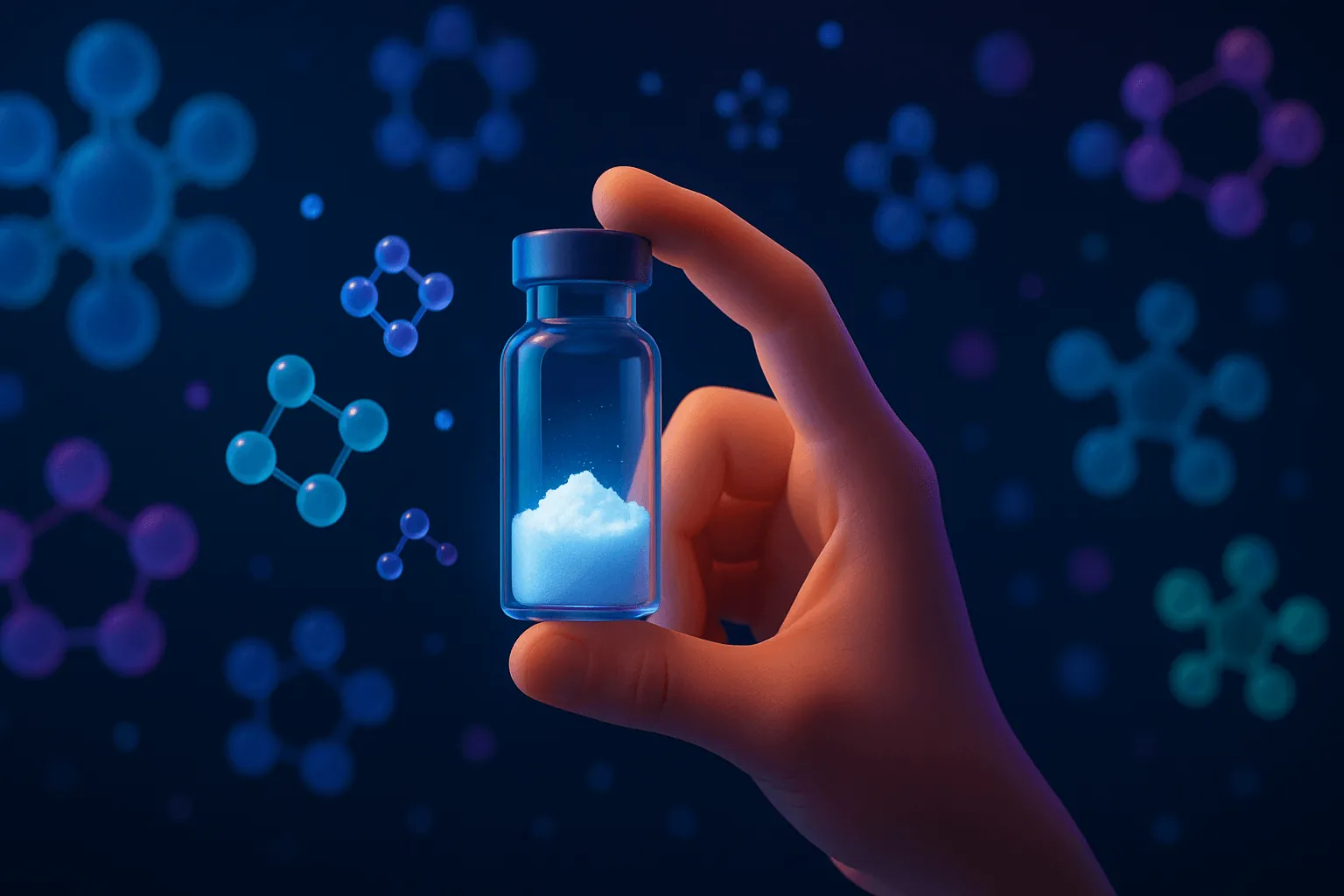
Peptide Beginner's Guide
Everything you need to know about peptides: what they are, how they work, and how to get started safely.
What Are Peptides?
Peptides are short chains of amino acids, the building blocks of proteins. While proteins can contain hundreds or thousands of amino acids, peptides are typically 2-50 amino acids long. Your body naturally produces many peptides that act as signaling molecules, hormones, and neurotransmitters. Therapeutic peptides are synthetic versions designed to mimic or boost these natural signals.
How Do Peptides Work?
Peptides work by binding to specific receptors on cell surfaces, triggering biological responses. For example, growth hormone releasing peptides (GHRPs) bind to receptors on pituitary cells to trigger GH release. GLP-1 agonists bind to receptors in the gut and brain to suppress appetite. Each peptide has a specific mechanism based on its amino acid sequence and the receptors it targets.
Common Categories
Healing peptides (BPC-157, TB-500) promote tissue repair. Weight loss peptides (Semaglutide, Tirzepatide) suppress appetite via GLP-1 pathways. Growth hormone peptides (CJC-1295, Ipamorelin) stimulate natural GH release. Anti-aging peptides (Epithalon, GHK-Cu) target cellular aging mechanisms. Nootropic peptides (Semax, Selank) enhance cognitive function.
Administration Routes
Most peptides are injected subcutaneously (SubQ), into the fat layer just below the skin, using a small insulin syringe. Some peptides are available as nasal sprays (Semax, Selank). A few can be taken orally (BPC-157, KPV). The route affects bioavailability, and SubQ injection typically provides the most reliable absorption.
Getting Started Safely
Start with one peptide at a time at the beginner dose to assess tolerance. Source from reputable suppliers that provide third-party testing certificates (COAs). Learn proper reconstitution technique before your first injection. Use bacteriostatic water (not sterile water) for reconstitution, since it contains a preservative that extends shelf life. Always refrigerate reconstituted peptides.
Essential Supplies
You'll need: the peptide vial (lyophilized powder), bacteriostatic water (BAC water), insulin syringes (U-100 is most common), alcohol swabs for sterilization, and a sharps container for used needles. Use the peptide calculator to work out exactly how much to draw for your dose.
Related Articles
How to Reconstitute Peptides
Step-by-step guide to properly mixing your peptide powder with bacteriostatic water for injection.
How to Inject Peptides Subcutaneously
Complete guide to subcutaneous peptide injection — technique, sites, rotation, and safety tips.
Peptide Storage Guide
How to properly store peptides to maintain potency — temperature, light, and shelf life guidelines.
Peptide Glossary
Common peptide terms explained — from BAC water to subcutaneous injection, reconstitution to half-life.