Not medical advice. Talk to your provider before using any peptide. Full disclaimer
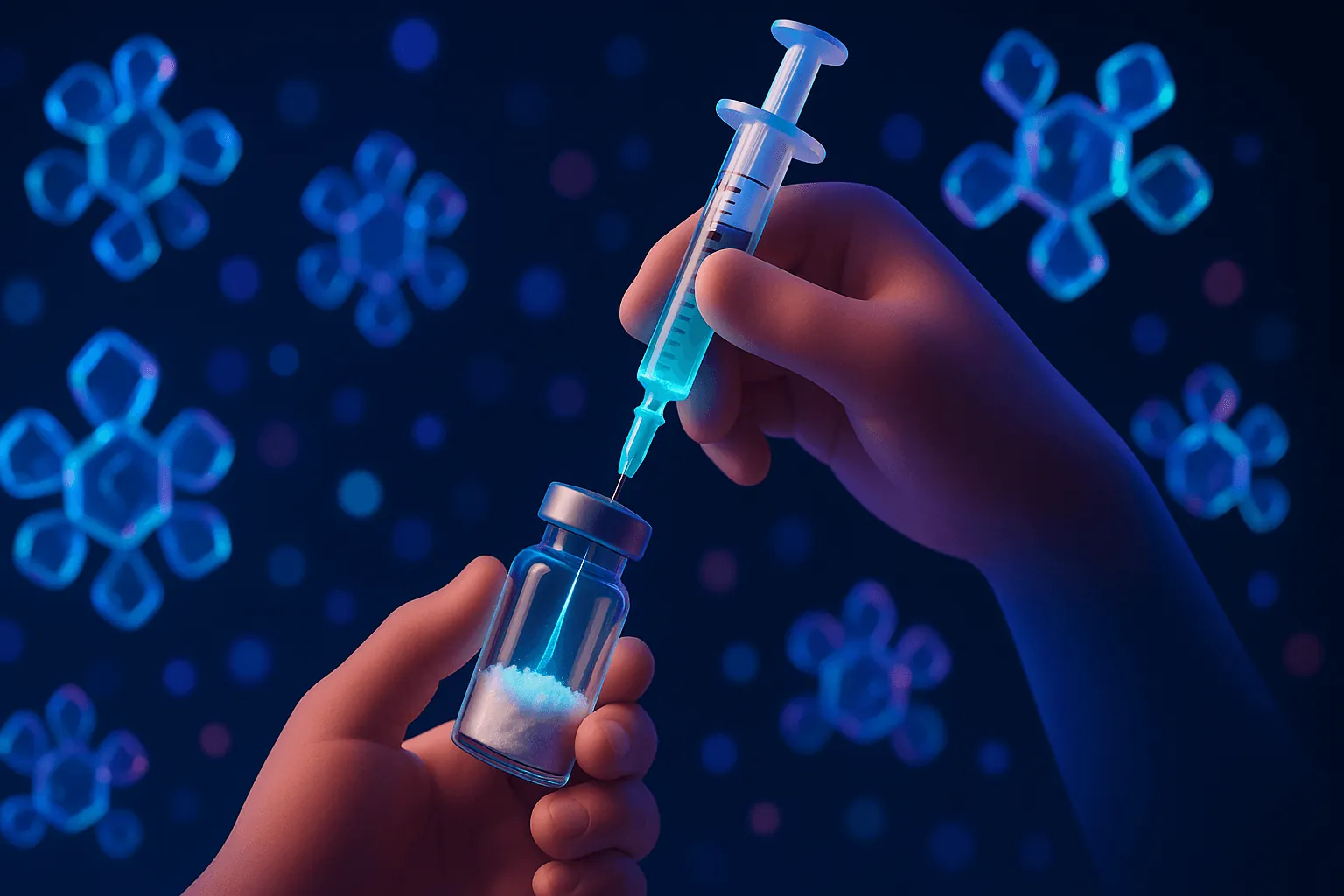
How to Reconstitute Peptides
Step-by-step guide to properly mixing your peptide powder with bacteriostatic water for injection.
Watch: How to Reconstitute a Peptide Vial
Video by Movement Clinic, embedded from YouTube. Not produced by Peptide Schedule.
What is Reconstitution?
Reconstitution is the process of mixing lyophilized (freeze-dried) peptide powder with bacteriostatic water to create an injectable solution. Peptides are shipped as powder because they're more stable in this form. Once reconstituted, the solution must be refrigerated, and how long it stays good depends on the compound.
What You Need
Lyophilized peptide vial, bacteriostatic water (BAC water: sterile water with 0.9% benzyl alcohol preservative), insulin syringe for mixing, alcohol swabs, and a clean workspace. Use bacteriostatic water unless the product's own directions name another diluent. Plain sterile water lacks the preservative needed for multi-use vials. The peptide supplies guide covers syringe sizes, needle gauge and sharps disposal.
Step 1: Clean Everything
Wash your hands thoroughly. Wipe the tops of both the peptide vial and the BAC water vial with alcohol swabs. Let the alcohol dry completely before proceeding. Work on a clean, flat surface.
Step 2: Draw the Water
Using a fresh insulin syringe, draw the desired amount of BAC water. Common amounts are 1mL or 2mL depending on the peptide. The reconstitution section of the peptide calculator shows the right amount for your peptide and target concentration.
Step 3: Add Water to the Vial
Insert the needle through the rubber stopper of the peptide vial. Angle the syringe so water runs down the inside wall of the vial. Do NOT squirt water directly onto the powder cake. Release the water slowly. The peptide is delicate and vigorous mixing can damage it.
Step 4: Let It Dissolve
Do NOT shake the vial. Instead, gently swirl it in small circles or simply let it sit for a few minutes. The powder should dissolve into a clear solution within 5-10 minutes. If particles remain after 10 minutes, continue gentle swirling. If the solution is cloudy, it may indicate degradation.
Step 5: Store Properly
Once reconstituted, immediately refrigerate the vial at 2-8°C (36-46°F). Keep it away from light. Label the vial with the reconstitution date. How long it stays stable varies by compound, from hours to months, so check the storage guidance on that peptide's page before relying on a date.
Want this beside your supplies? Print the peptide reconstitution guide (free PDF). One page with the mixing math, a units-to-draw table, syringe sizes, and the safety checklist.
Frequently Asked Questions
Related Articles
Peptides for Beginners: What to Know
What peptides are, why they took off, which ones FDA has approved, how people take them, and what studies and community reports say, side by side.
How to Inject Peptides Subcutaneously
Complete guide to subcutaneous peptide injection: technique, sites, rotation, and safety tips.
Peptide Storage Guide
How to properly store peptides to maintain potency: temperature, light, and shelf life guidelines.
Peptide Glossary
Common peptide terms explained, from BAC water to subcutaneous injection, reconstitution to half-life.