

Not medical advice. Talk to your provider before using any peptide.
Full disclaimer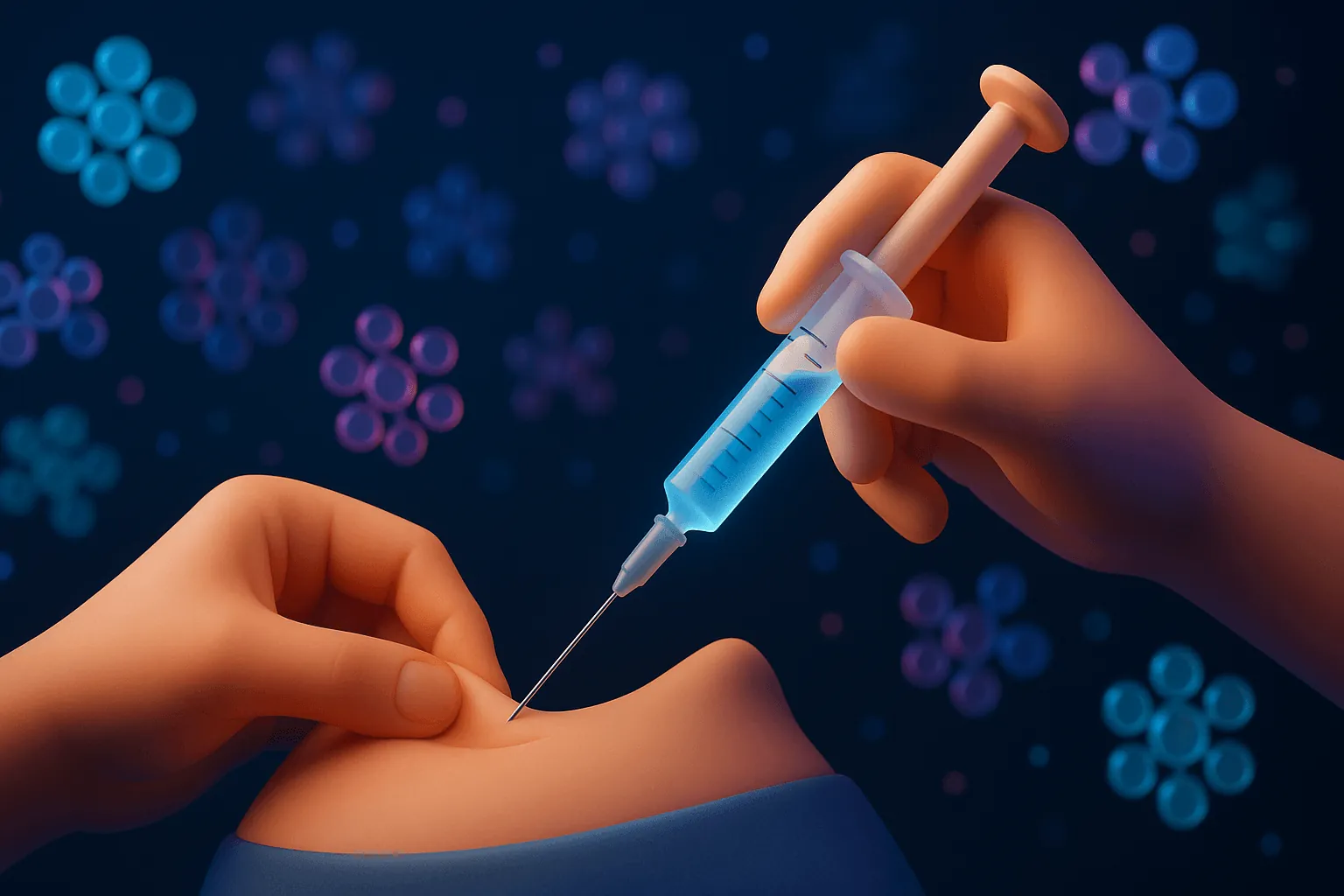
How to Inject Peptides Subcutaneously
Complete guide to subcutaneous peptide injection — technique, sites, rotation, and safety tips.
Subcutaneous (SubQ) Injection Basics
Subcutaneous injection delivers the peptide into the fat layer between the skin and muscle. It's the most common route for peptide administration because it provides consistent absorption, is easy to self-administer, and uses small, thin needles (typically 29-31 gauge insulin syringes).
Injection Sites
The best SubQ injection sites are: abdomen (2 inches away from the navel — the most common and easiest site), outer thigh (front and outer areas), and the back of the upper arm (deltoid area — may need assistance). For healing peptides like BPC-157, inject as close to the injury site as practical.
Step-by-Step Injection
Clean the injection site with an alcohol swab and let it dry. Pinch a fold of skin between your thumb and finger. Insert the needle at a 45-90 degree angle (45° for leaner areas, 90° for fattier areas). Push the plunger slowly and steadily. Hold for 5 seconds after injecting. Remove the needle and apply gentle pressure with an alcohol swab.
Site Rotation
Rotate injection sites to prevent lipodystrophy (fat loss or hardening at the injection site). Use a pattern: left abdomen, right abdomen, left thigh, right thigh. Never inject in the exact same spot twice in a row. Keep at least 1 inch between injection points.
Timing Considerations
Some peptides should be injected on an empty stomach (GH peptides, AOD-9604). GLP-1 agonists can be taken with or without food. Healing peptides like BPC-157 have no food timing restrictions. Before-bed dosing is popular for GH peptides to amplify natural nocturnal GH release.
Safety Tips
Always use a new, sterile syringe for each injection. Never reuse or share needles. Dispose of used syringes in a proper sharps container. If you see blood when aspirating, remove the needle and try a different spot. Mild redness or a small bump at the injection site is normal and should resolve within a few hours.
Related Articles
Peptide Beginner's Guide
Everything you need to know about peptides: what they are, how they work, and how to get started safely.
How to Reconstitute Peptides
Step-by-step guide to properly mixing your peptide powder with bacteriostatic water for injection.
Peptide Storage Guide
How to properly store peptides to maintain potency — temperature, light, and shelf life guidelines.
Peptide Glossary
Common peptide terms explained — from BAC water to subcutaneous injection, reconstitution to half-life.